Fig June Drop: What’s normal vs. not?
Did your Fig tree drop a lot of fruit this summer? Perhaps more than you’re used to? Below we explore a few reasons why this happens and whether or not you need to take action.
What is “June drop”?
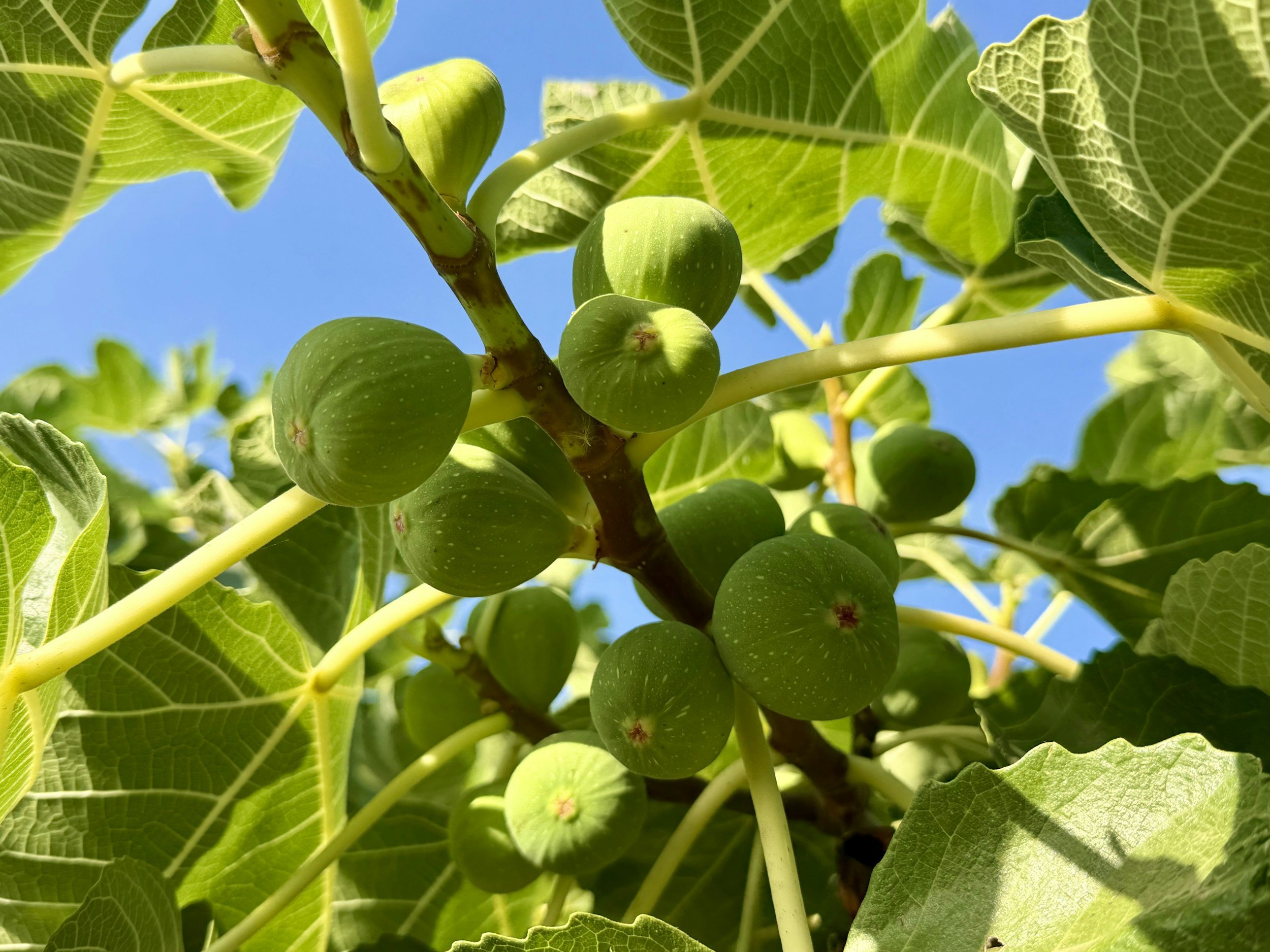
Modern fruit trees are bred to produce a lot of fruit, often more than the tree can actually support to full ripeness. In late spring or early summer—often right around June—figs naturally shed some immature fruitlets. Other fruit trees like citrus, avocados, mangos, and some apples also naturally drop fruit (though not always in June). This natural phenomenon allows the tree to more efficiently allocate its carbohydrates into fewer remaining fruits, which makes for larger, tastier fruit and fewer broken branches. So, if you see some underripe fruit scattered beneath your fruit trees in June, it’s usually nothing to worry about.
Figs: a particularly fascinating “fruit”
Did you know that figs are, botanically speaking, not actually a fruit? In botany, a fruit is the seed-bearing, ripened ovary of a flowering plant (angiosperm). This is why tomatoes—not to mention cucumbers and squash—are not vegetables, but fruits!
In contrast, a fig is an inflorescence, a cluster of many tiny flowers and seeds that bloom inside a bulbous stem. This is why some fig varieties (like Smyrna and Calimyrna) require the fig wasp to climb inside and pollinate those tiny flowers in order for the “fruit” to ripen. But don’t worry, many common fig varieties like Black Mission, Kadota, and Brown Turkey are parthenocarpic—they produce fruit without requiring pollination—and therefore don’t need wasps.
Normal fig drop due to the breba crop
You might be surprised to know that many fig varieties produce two crops each year. The first, known as the “breba” crop, grows on last year’s wood. This is the fruit you see in spring and early summer, and it’s not always the tastiest or most abundant. If your fig tree is heavily pruned during winter dormancy, you might not get any breba crop—because last year’s wood was cut off. The second, main fig crop grows on this year’s new wood and is what ripens towards the end of summer—aka peak fig season!
If you see a lot of figs fall off your tree in early summer, it is likely the tree shedding its breba crop, and you should hopefully see plenty of baby figs still on the tree. Those are the main crop that will ripen in late summer and early fall.
This June 2026, we noticed that fig trees across Los Angeles dropped more fruit than normal. Our hypothesis is that the figs were also affected by that heat wave we got in February. In addition to cutting short the chill hours for many stone fruit trees, we think LA figs were woken up a bit too early and perhaps produced (and later dropped) a larger breba crop than in typical years. As long as you still have the main crop on your tree, your fig should be fine.
Abnormal fig drop due to Black Fig Fly
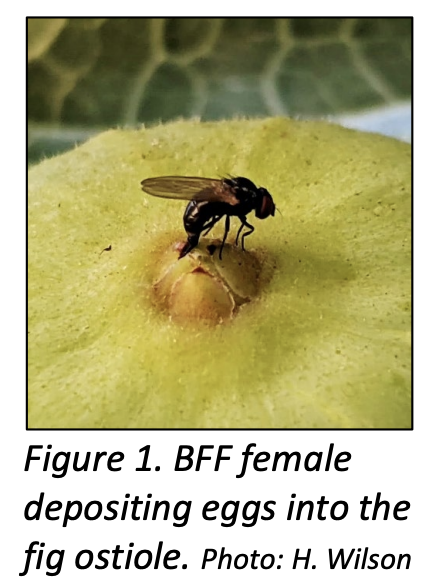
In recent years, the Black Fig Fly has set its sights on Southern California. This invasive insect only attacks figs, layings its eggs in young, unfertilized fruit. The larvae feed on the figs in which they reside, thereby damaging the fruit and causing it to fall off the tree before ripening. This savvy little fly is actually taking advantage of the breba crop and June drop; because once the bug-filled fruit (yuck) fall to the ground, the larvae crawl out and burrow into the soil to pupate over winter. Come spring, the mature flies emerge, mate, and continue the cycle of attacking our precious figs.
If you suspect your tree has Black Fig Fly, you need to check the fallen fruit for pinholes on the exterior (the exit point for the larvae) and/or larvae and discoloration on the interior. This will likely tell you whether the fruit drop is due to normal June drop or due to Black Fig Fly.
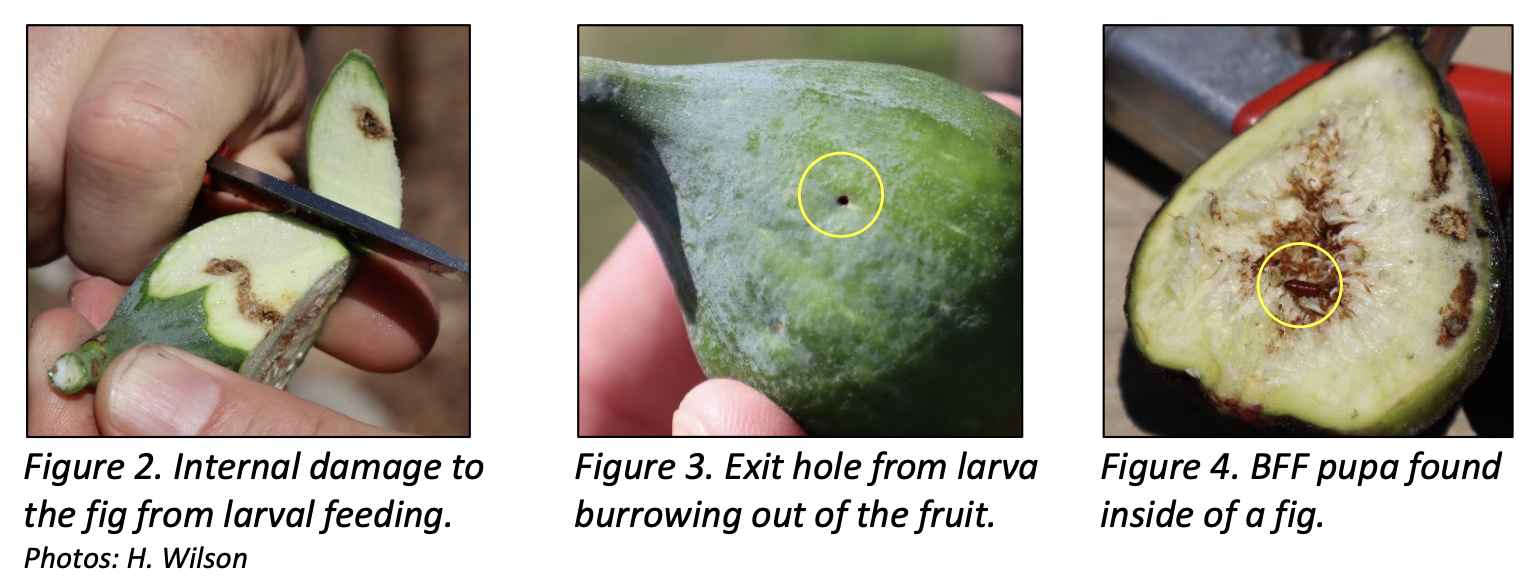
Source: University of California Agriculture and Natural Resources, link in image.
If you find signs of bug activity in your fallen fruit, you should:
Immediately remove and destroy all fallen fruit.
Do not throw them away in the green bin or your compost pile.
Put them in a plastic bag and leave in the sun for a few hours to kill the larvae before disposing of them in your black trash cans.
Check daily to remove and destroy all fallen fruit. This prevents the pupae from overwintering in your soil.
Protect the immature fruit remaining on your tree from egg deposits with little mesh bags like these.
The larvae in the fruit are protected from any insecticide you might be tempted to spray, but sticky fly traps can help catch mature flies as they emerge from the soil. Other resources suggest laying down tarps or weed cloth to prevent larvae from burrowing into the soil and mature flies from escaping it. However, we do not recommend this as it will negatively affect the soil health of your fig tree. Instead, some people are experimenting with (and reporting positive results from) introducing beneficial nematodes via soil drench as a way to control the Black Fig Fly pupae population in the soil.
If you’re experiencing a Black Fig Fly infestation and are interested in seeing how beneficial nematodes can help, we offer beneficial nematodes as part of our Compost Teana service. Please reach out to info@fruitstitute for more information or to book your soil drench.